- By THRI Admin
- Posted September 09, 2026
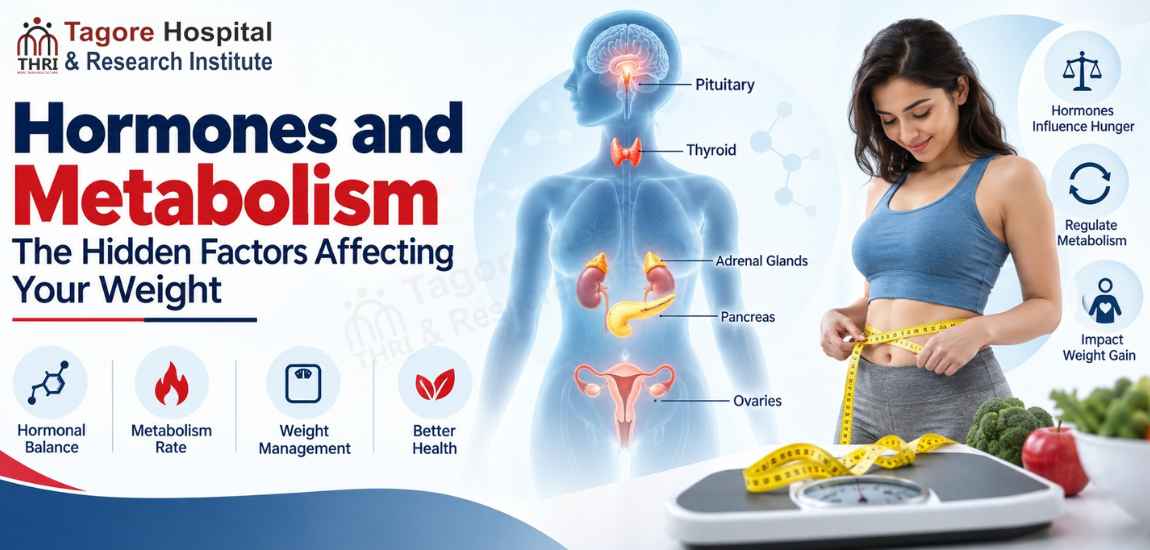
Did you ever stop to think that your weight may fluctuate even if your diet and workouts are more or less on target? The truth is that hormones and metabolism can be more important than just food and exercise.
Hormonal fluctuations, lifestyle, age, duration of sleep and stress levels, and some medical conditions can create an effect on the way a person loses or gains weight.
The better you understand the connection between hormones and metabolism, the better you become in managing your weight.
So what exactly are hormones and metabolism?
Hormones are chemical messengers produced by glands and organs in our bodies. They influence many important processes such as hunger, digestion, blood glucose levels, stress responses, reproductive function, and energy balance.
In Internal Medicine Department Metabolism refers to chemical processes that are conducted in the body in order to convert food into energy and perform various vital functions.
Even when we don’t do anything, our body still spends energy in order to do processes like breathing, circulating blood, regulating body temperature, and performing the vital processes in our organs.
What Is the Role of Hormones in Weight Management?
Hormones have a significant role in controlling appetite, feeling full, blood sugar levels, and the balance of energy in the body. If the said systems are functioning properly, they enable the system to achieve a balance between incoming energy and energy used.
For instance, leptin helps to indicate how full the body is and also transmits information about available energy in the body. On the other hand, ghrelin stimulates the feeling of hunger. Insulin controls the level of blood sugar and plays a role in the process of using and storing nutrients in the body. Hormones shape the weight of a person.
Changes in the levels of hormones and their sensitivity level cause changes in appetite, cravings, energy, and fat deposits in the body. However, hormones are only one element of one’s weight.
You Can Also Read :- Ulnar Wrist Pain Treatment: Causes, Symptoms & Recovery
What Is the Connection Between Hormonal Imbalance and Weight Gain?
Weight gain is sometimes linked to hormonal imbalance, which can lead to changes in appetite and metabolism.
Insulin resistance is one example of a condition where the body becomes less effective at dealing with insulin and may lead to metabolic disorders, bringing about weight gain. On the other hand, hypothyroidism is a condition characterized by decreased metabolic activity in the body that can lead to weight gain as well.
Stress affects our weight too, as an increase in stress might lead to a change in cortisol levels and might increase appetite as well.
Finally, do not forget that weight gain does not automatically prove that you have a hormonal imbalance, and it is wise to check with a practitioner to know the reasons for weight gain.
What Is the Role of Metabolism in Weight Loss?
Although metabolism and weight loss go hand in hand, metabolism is more complicated than just a "slow" or "fast" metabolism.
The total amount of energy the body uses in a day is known as total daily energy expenditure, TDEE, which consists of energy used by the body at rest, energy used in physical activities, as well as the energy required for digestion.
For example, if you lose body mass, your body will require less energy to sustain the new body weight.
It is worth mentioning that the body will undergo metabolic changes when one loses weight, which makes losing further weight a difficult process.
Instead of using products or quick-fix solutions that claim to boost your metabolism, rely on habits that you can sustain over time.
What Are the Main Hormones That Affect Body Weight?
Numerous hormones play vital roles in affecting the energy balance and body weight of a person.
- Insulin: Helps in regulation of blood sugar levels as well as in regulation of how the body uses and stores nutrients.
- Leptin: A hormone that communicates information about available energy in the body and signals fullness.
- Ghrelin: Helps in stimulating hunger and affects how much food is consumed.
- Thyroid hormones: Help in metabolism regulation and energy usage.
- Cortisol: The hormone produced during stress affects appetite, blood sugar, and fat distribution in the body.
- Estrogen: Hormonal changes of estrogen levels would change body fat composition and fat distribution.
- Growth hormone: It is helping in metabolism process, tissue growth, and body composition.
These hormones do not work in isolation. They have an effect on each other and the brain, the digestive system, liver, muscles, and fatty tissue.
You Can Also Read :- Female Lower Back Pain: Causes, Symptoms, Treatment and Prevention
What Is the Link Between Thyroid Hormones and Weight?
The task of the thyroid gland is to produce hormones to control the metabolism and perform many other functions in the body. If there is a shortage of hormone production, the condition known as hypothyroidism may occur.
Some of the symptoms of hypothyroidism might be lethargy, increased sensitivity to cold, constipation, dry skin, and weight gain. However, it is worth noting that issues related to the thyroid are only one potential cause of changes in body weight.
If you gain weight unexpectedly and suffer chronic fatigue along with some other signs of thyroid malfunction, it is advisable to reach out to the doctor and have the thyroid function assessed.
Conclusion
Hormones and metabolism can affect several facets of weight, such as changes in weight, imbalance in energy levels, appetite, blood sugar, and fat distribution. However, we notice that in fact, weight changes are not limited to just one hormone or metabolic process.
If you notice sudden weight gain or find it hard to lose weight, you are feeling tired or your appetite suddenly changes, then you may wish to seek a professional evaluation.
At Tagore Hospital Jaipur, Department of Endocrinology and related medical services offer evaluation and treatment related to hormones, thyroid, metabolism, diabetes and other endocrine disorders. The specialists in the hospital will consider your symptoms and health history and suggest necessary tests and treatment.
An effective approach to weight management means combining healthy diet, physical exercise, sleeping enough, coping with stress and seeking necessary medical care.
Frequently Asked Questions
1. Can hormones determine how body fat is distributed?
Ans. Indeed. Hormones may contribute to fat distribution in the organisms. Hormones involved with fat distribution include insulin, estrogen, and cortisol. Besides, fat distribution depends on age, genetics, sex, diet, and physical activity.
2. Why is it more difficult to lose weight in the course of time?
Ans. Age makes weight loss harder because muscle and activity levels fall while hormone levels may change and man’s energy needs differ. Keeping muscle mass can be accomplished by means of resistance training.
3. Can lack of sleep affect weight-related hormones?
Ans. Yes. Poor or inadequate sleep may influence hormones and signals responsible for hunger and satiety. It may probably thereby worsen people’s appetite and induce making it challenging to stick to the diet.
4. In what ways does stress affect the ability to control weight?
Ans. Yes. Long-term stress leads to changes in cortisol levels, and therefore also affects eating behaviors by increasing hunger and cravings. Managing stress through physical activity, relaxation techniques, consistent sleep, and socializing can help individuals adopt healthier habits and remain active.
5. Does insulin resistance influence metabolism?
Ans. Yes. Insulin sensitivity regulates how well insulin works in the body, thus controlling blood sugar levels. Insulin resistance is related to metabolic disorders such as prediabetes and type 2 diabetes and is typically present with high waist circumference. In case of insulin resistance suspicion, proper testing and treatment shall be recommended.
Tags