- By THRI Admin
- Posted September 20, 2026
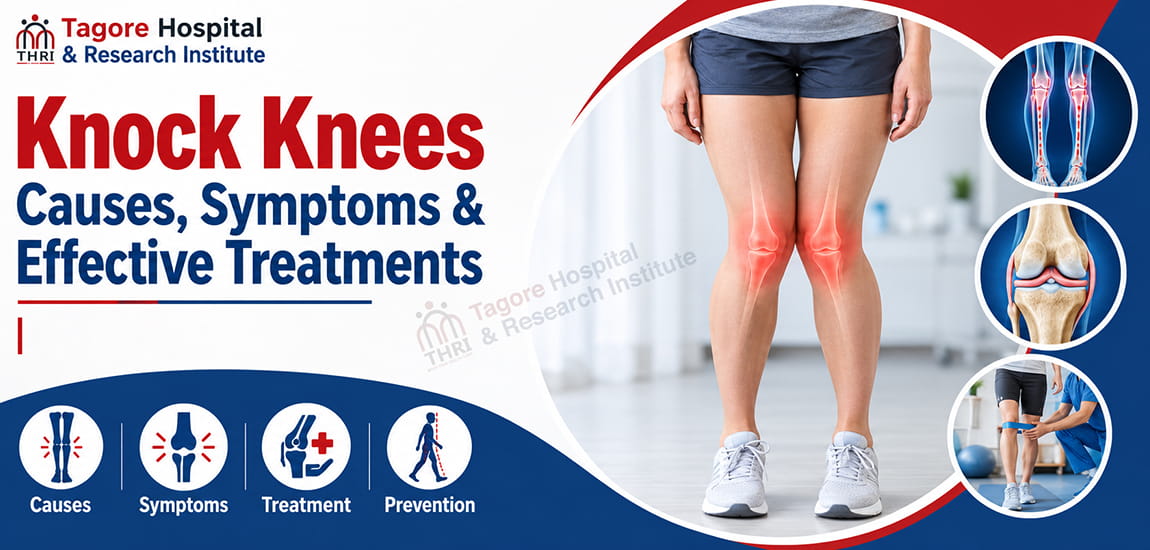
The medical term for knock knees is genu valgum. This is a case when the patient’s knees bend inward and touch one another or come very close to each other while the ankles point in a different direction. The condition is found among many children as a part of normal growth of the legs, however, in older people knock knees pose a serious threat to their health. Depending on the severity of the problem that causes knock knees, the treatment may vary from waiting and performing exercises to physiotherapy sessions or even surgical procedures.
What Are Knock Knees?
Knock knees occur when the lower legs turn outward from the knees, causing the knees to touch when a person stands with the feet apart. In some instances, a small degree of knock knees is considered part of normal childhood development.
In most cases, the condition resolves as the bones mature; however, doctors may recommend further assessment if the condition fails to resolve by the appropriate age, becomes progressively worse, only affects one leg, or leads to pain and difficulty walking.
In adults, knock knees may cause altered movement patterns that place extra stress on the knees, hips, ankles, or feet.
What Are the Symptoms of Knock Knees?
The most apparent indicator is the observed inward bending of the knees. However, the symptoms of this condition can differ depending on the severity and the cause of the issue.
Common symptoms and signs can include the following:
- Knees being close together or touching each other when standing
- Ankles being noticeably separated when the knees are together
- Issuing problems with walking or running normally
- Changes in the gait
- Discomfort in the knees, hips, or ankles
- Uneven wear of shoes
- Feeling unstable in the legs
- Difficulties in performing some physical activities
- Tiredness or discomfort caused by long periods of standing or walking
You Can Also Read :- Hormones and Metabolism: The Hidden Factors Affecting Your Weight
What Causes Knock Knees?
Knock knees can be caused by a variety of factors; hence, it is crucial to know what causes the condition.
Normal Growth
Children may experience changes in the way their legs look as they grow. Knock knees may happen naturally during developmental phases and eventually fix on their own.
Vitamin Deficiency
Some deficiencies can impair the health of bones, primarily vitamin D deficiency, and lead to the formation of defective bones in children. This can lead to nutritional rickets, which in turn can cause abnormal leg configuration.
Medical Conditions
Some conditions that are related to the skeletal system can interfere with the development and shape of bones and contribute to the progression of the condition.
Previous Injury
In rare cases, an injured growth plate or bone can result in abnormal development of the leg.
Being Overweight or Obese
Excess weight can stress the body’s lower limbs and may worsen alignment issues or exacerbate other conditions that might be affecting the alignment.
Arthritis
In adults, joint degeneration or arthritis can lead to changes in the legs’ alignment about time and in some cases create a knock-knee situation.
Genetics and Developmental Factors
Some individuals inherit certain genetic predispositions concerning some specific alignment in knees or legs.
How Are Knock Knees Diagnosed?
The first step for a healthcare professional typically includes executing a physical examination along with an analysis of the individual's gait, alignment of legs, and mobility in Orthopaedics Department.
The physician may inquire about the following:
- Date of first observation of inward alignment of knees
- Any discomfort while walking
- Earlier injuries
- Child growth and development
- Any hereditary issues with bones and joints
- Any other health problem
Depending on the age of the patient and severity of ailment, imaging studies such as weight-bearing X-rays can be performed to examine bone alignment. Imaged studies for detection of any underlying conditions due to metabolic, nutritional or skeletal issues may be conducted as well.
What Are the Treatment Options for Knock Knees?
Knock-knees treatment is determined based on factors such as the age of the individual, the severity of the condition, the symptoms, and the possible cause of the condition.
1. Observation and Monitoring
In the case of a slight knock-knee condition in a child, there may not be a need for treatment. The doctor may recommend monitoring the situation periodically to see whether the child is progressing in terms of physical or developmental growth.
2. Fixing the Problem
In some cases knock-knees may result from a deficiency in nutrition, a bone disease, or some other medical condition. In such cases dealing with the root cause can help make the situation improve.
3. Physical Therapy
Physical therapy may be necessary if the knock-knee condition causes poor movement, imbalance, and weakness. A physical therapist can come up with a treatment plan that would help the person build up strength, flexibility, balance, and movement of the lower body.
4. Exercises for Strength and Control of the Legs
Exercises selected for the patient depend on the condition they are in. Exercises can be organized to train the muscles surrounding the hips, knees, and legs, including:
- Exercises to strengthen the hip and gluteus
- Controlled squats
- Step-ups
- Leg strength exercises
- Exercises for balance and stability
- Stretching when needed
Exercises suitable for the patient should depend on patient age, physical condition, and cause of the condition. Running exercises won’t fix structural deformities, but they can increase muscle control and the ability to move.
5. Measures for Support
In some instances, a doctor or physical therapist may advise using supportive shoes or other similar means. Such measures should only be undertaken once the doctor or physical therapist has recommended them.
6. Surgery
Surgery is only considered in serious cases. In the case of severe, progressive, or problematic deformities, surgery may be recommended.
You Can Also Read :- Ulnar Wrist Pain Treatment: Causes, Symptoms & Recovery
Can Knock Knees Be Prevented?
There are some things people can do to help prevent knock knees, even if they cannot keep them from happening, especially when there are genetic problems or developmental issues in the way. Some ideas include making sure that children get proper nutrition and maintaining their overall bone health.
It is a wise decision to consult with healthcare providers if there are some serious knock knee issues with your child, if the situation is getting any worse, if only one leg is affected, or if there is pain involved.
Conclusion
In children, knock knees usually occur and tend to be rectified spontaneously as the child matures. Nevertheless, any knock knees that are serious, long-lasting or worsening should be under the care of a doctor.
An early examination can assist clinicians in diagnosing issues causing bone and joint disorders, and help them to conclude whether the preferred mode of treatment will be regular monitoring, physical therapy, exercises, medication or surgical intervention.
Tagore Hospital Jaipur has an Orthopaedics Department where the specialists in this department can perform an evaluation of leg deformities in patients.
Frequently Asked Questions
1. What is knock knee?
Ans. Knock knee or genu valgum is a problem with the alignment of the legs in which the knee abnormally angles inwards and can sometimes touch each other. In mild cases, knock knee is normal for growing children.
2. What are the various causes of knock knee?
Ans. Reasons for knock knee can be due to normal growth and development, lack of proper nutrition, bone illnesses, previous injuries, excessive body weight, arthritis or hereditary factors.
3. What are the most recognized symptoms of knock knee?
Ans. Typical symptoms of knock knee are inwards positioned knees, wide separation between the ankles, alteration of gait pattern, pain in legs and difficulty in performing certain activities.
4. Is surgery necessary in the treatment of knock knees?
Ans. The decision of whether or not to operate depends on many things, including the reason and the severity of the malformations. In mild cases, children may simply grow out of the deformity. Physiotherapy, exercise, and treatment of underlying conditions may sometimes be helpful, but structural anomalies usually require surgery.
5. Which exercises are useful for knock knees?
Ans. Exercises that focus on strengthening the hips, buttocks, legs, and enhancing the coordination may be effective. Physiotherapists can help with the choice of exercises.
6. Does physiotherapy have any effect in the treatment of knock knees?
Ans. Physiotherapy can help strengthen the muscles and increase flexibility and coordination in terms of the movements. However, the real chance of changing the shape of the bones depends on the age of the patient and the reasons for the condition.
Tags