- By Tagore Hospital
- Posted October 21, 2025
Introduction
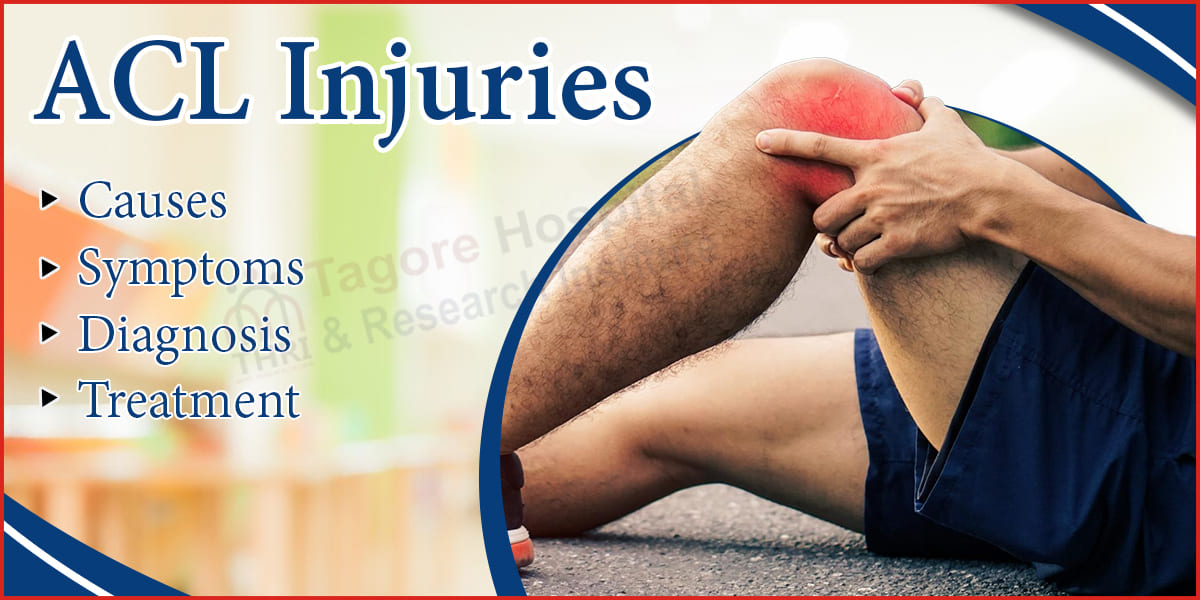
If you are a sporty or active person, probably, you have already heard about the acronym ACL which is short for anterior cruciate ligament. To be precise, the ACL is one of the ligaments that act as knee joint stabilizers — when the ligament is torn or is subjected to overstretching, a person usually feels pain, sees swelling, and faces the option of being unable to walk or move the affected limb.
This form of injury is usually associated with athletes or fitness aficionados but, in some cases, it can affect non-athletic individuals due to falling, twisting suddenly, or landing poorly. The following guide gives a comprehensive overview of ACL injuries covering every aspect from defining an ACL injury to the causes and symptoms of injury, diagnosis, and then the different treatment options for recovery.
What is an ACL Injury?
An ACL injury is characterized by the rupture or stretching of the anterior cruciate ligament, which is one of the four main ligaments in the knee. This ligament connects your femur that is the thighbone with your tibia that is the shinbone and thus helps in ensuring the stability of the knee during movements to a great extent.
The chances of ACL injury are high for such activities where there are sudden stops, rapid changes in direction, jumping, or landing. That is the reason these injuries are common in sports like football, basketball, cricket, and skiing.
ACL injuries are classified into three grades:
- Grade 1 (Mild Sprain): The ligament is still intact but has been stretched.
- Grade 2 (Partial Tear): The ligament is intact, but it may cause the knee to feel unstable.
- Grade 3 (Complete Tear): The ligament is wholly torn and in most cases, surgery is required.
In any case, an ACL injury takes a considerable toll on your movement if early and proper treatment is not administered.
You can read also:- Black Teeth: Causes, Symptoms & How to Fix Them
What are the Symptoms of an ACL Injury?
Being aware of the signs of an ACL injury early is of utmost importance in getting the right treatment and preventing further harm. The symptoms that are frequently observed are:
- A “Popping” Sound or Sensation: A lot of patients say that they have either heard or felt a “pop” in their knee when the neura was damaged.
- Sudden Pain: Severe pain on the knee right after the injury.
- Swelling: Rapid swelling within a few hours due to bleeding in the joint.
- Instability: A sense that the knee may collapse under the body's weight.
- Limited Range of Motion: Difficulty in either bending or straightening the leg.
- Tenderness: The area surrounding the joint is equally painful as the knee, or painful to a light touch.
ACL Injury Main Causes
Although ACL injuries can be sustained by anyone, risk of injury can increase with various repetitive and sudden movements, to which the body is subjected to. Below are the main reasons for these injuries.
- Sudden Change of Direction: The ligament experiences a significant increase in stress during rapid pivots or turns while running.
- mproper Landing: Jumping and landing poorly contributes a significant amount to the incidence of ACL tears.
- Sudden Stopping or Deceleration: The body's risk of injury to the knee generally increases, during a rapid deceleration.
- Contact or Collision: Knee injuries from collision type sports are often sustained due to direct impact from another player.
- Weak Muscles or Poor Technique: The risk of injury increases generally, when doing exercises or activities using weak muscles and compromised technique.
Diagnosis
A precise diagnosis is the cornerstone of ACL injury treatment and recovery. Your doctor will follow specific steps when they determine you have a ligament tear.
- Physical Exam: The doctor will check your body for swelling and tenderness before testing your joint movement capabilities. The physician will assess ligament stability using several special tests (e.g., Lachman test, pivot shift test).
- Medical History: The doctor will ask questions about how the injury occurred, what you felt at the time of injury (e.g., hearing a pop), and your activity level of function.
- Imaging Studies:
- MRI (Magnetic Resonance Imaging) : serves as the most accurate diagnostic method to detect ACL tears while providing assessment of meniscus and cartilage damage.
- X-ray: to rule out or confirm any bony injury.
- Ultrasound: serves as a diagnostic tool which doctors use to detect fluid buildup and ligament tears.
You can read also:- Arm Pain: Symptoms, Causes, Prevention, and Treatments
The treatment of ACL injuries depends on various available options.
Doctors select ACL treatment methods through evaluation of injury severity and patient age and physical activity requirements and medical condition. The treatment plan consists of surgical and non-surgical approaches.
1. Non-surgical treatment (for partial tears or mild sprains)
Doctors often suggest conservative treatment options for people experiencing ligament sprains or partial tears.
- Rest and Ice: It is important to continue to ice and rest to minimize the swelling or aches you feel.
- If you are able to keep your leg elevated as well as use a wrap for support, you will find that the swelling goes down.
- Physical therapists will design an exercise program specially for you to regain strength, range, and balance.
- Bracing: In many cases it may be an effective way to stabilize your knee during your recovery process.
2.Operative treatment (for complete tear or those athletes who are active)
In more serious injuries or if you are looking to return to sport, surgery may be needed.
- ACL Reconstruction: The ligament will then be reconstructed with either a graft from your body (hamstring or patellar tendon) or cadaver.
- Rehab: After the surgery, you will be in physical therapy for 2-4 months to restore range of motion, strength, and gain confidence in the knee.
3. ACL Recovery Timeline:
If non-surgical recovery is the recommended treatment, the timeline is 2-3 months with regular Physiotherapy. Surgery, however, will yield a more prolonged recovery time period which can take 6-9 months depending on the course of healing, fitness level, and ability to participate in daily activities.
How Do You Prevent ACL Injuries?
There are some uncontrollable injuries, but the majority of injuries can be mitigated if techniques are carried out properly. The following are some great tips to avoid an ACL injury:
- Warm Up: Gentle, low-intensity stretching warms-up the muscles and joints better than static stretching does!
- Strengthen Your Supporting Muscles: Strengthen your quadriceps, hamstrings, and glute/hip muscles.
- Unilateral Stability: Exercises such as single-leg stands, etc. and/or balance boards are great for stability exercises.
- Use Appropriate Techniques: This is especially important during jump/land or change of direction in sports.
- Utilize Appropriate Footwear: Pick footwear to allow grip and support sufficiently to prevent twisting injuries.
Conclusion
Suffering an ACL injury can be extremely distressing, however with early detection, appropriate management, and rehabilitation, returning to sport is realistic. Tagore Hospital in Jaipur provides overall management of your ACL injury with a complete orthopedic assessment, the latest imaging technology, and specialized surgical management and physiotherapy that will restore stability of your knee while also rebuilding your confidence. Whether you are an athlete or a seasonal weekend warrior! Your knees will last longer when you understand what your body is doing and perform preventative strategies. In order for your recovery to begin you need the appropriate treatment plan. We will be with you every step of the way until you meet your objectives.
Frequently Asked Questions (FAQs)
Q1. Can ACL injuries heal without surgery?
- Ans. Mild or partial ACL injuries can be treated with rest, physiotherapy, and bracing; complete tears typically require surgery for complete stability.
Q2. What would happen if an ACL injury is not treated?
- Ans. Choosing not to treat the knee could leave it unstable and require additional surgery for restabilizing it, or it could increase the risk of another injury, such as a meniscus tear (injury related to the cartilage), or increase the risk of developing arthritis from this, as well.
Q3. Is physiotherapy a necessary part of rehabilitation from an ACL injury?
- Ans. The knee will require rehabilitation to regain strength, flexibility, and coordination to have long-lasting healing,
Tags